The Ultimate Homemade Pizza Dough Recipe: Easy Rustic Crust That Rivals Wood-Fired Perfection
There’s something magical about homemade pizza that store-bought versions simply can’t replicate. That perfect combination of a crisp exterior giving way to a chewy, airy interior, topped with your favorite ingredients – it’s the ultimate comfort food that brings families together. If you’ve been searching for that elusive perfect pizza dough recipe, your quest ends here.
Many home cooks shy away from making pizza dough from scratch, thinking it requires professional equipment or advanced baking skills. But the truth is, with the right technique and a few simple ingredients, you can create pizza dough that rivals what you’d find in your favorite wood-fired pizzeria. This recipe uses active dry yeast and straightforward steps to deliver consistent, amazing results every time.
Why This Homemade Pizza Dough Recipe Works So Well
What sets this pizza dough apart is its perfect balance of ingredients and technique. The combination of warm water, sugar, and yeast creates an ideal environment for fermentation, while the precise flour-to-liquid ratio ensures the dough develops just the right amount of gluten. This results in that signature pizza crust texture – crispy on the outside with a soft, slightly chewy interior that can support your favorite toppings without becoming soggy.
One of the best features of this recipe is its versatility. The dough yields enough for two 12-inch pizzas, meaning you can make one for dinner tonight and freeze the other half for a quick meal later in the week. This makes it perfect for busy families or anyone who wants to enjoy homemade pizza without the daily prep work.
Essential Ingredients for Perfect Pizza Dough
The beauty of great pizza dough lies in its simplicity. High-quality flour provides the structure, while active dry yeast works its magic to create those beautiful air pockets. A touch of sugar feeds the yeast and adds subtle sweetness, while olive oil contributes to both flavor and texture. The salt not only seasons the dough but also helps control yeast activity for a perfectly balanced rise.
When selecting your ingredients, remember that quality matters. Unbleached all-purpose flour gives you the best texture, while extra-virgin olive oil adds a subtle fruitiness that enhances the overall flavor profile. If you’re looking for other dough-based recipes to try, our Easy French Bread Recipe uses similar principles for a different but equally delicious result.
Step-by-Step Pizza Dough Preparation
Begin by activating your yeast in warm water with a bit of sugar. This crucial first step ensures your dough will rise properly. The water temperature should be around 110°F – warm enough to activate the yeast but not so hot that it kills it. After about five minutes, you should see bubbles forming, indicating your yeast is alive and ready to work.
Next, incorporate your flour, olive oil, and salt. Whether you’re using a stand mixer with a dough hook or mixing by hand, the goal is to develop the gluten properly. This is what gives pizza dough its characteristic chewiness. The kneading process is essential – it aligns the gluten strands and creates the structure that will trap the gases produced by the yeast.
For those new to bread-making, don’t be intimidated by terms like “windowpane test.” This simple technique involves stretching a small piece of dough until it’s thin enough to see light through it. If it stretches without tearing, your dough has been kneaded sufficiently. This visual cue takes the guesswork out of determining when your dough is ready.
Perfecting Your Pizza Crust Texture
The secret to achieving that perfect pizza crust lies in understanding dough hydration and fermentation. This recipe strikes an ideal balance that creates a crust that’s sturdy enough to hold toppings but light enough to have that airy texture we all love. The resting period allows the yeast to work its magic, developing flavor and creating those beautiful bubbles that make professional pizza so appealing.
If you enjoy experimenting with different dough textures, you might also appreciate the techniques used in our 30-Minute No-Rise Pizza Dough Recipe, which offers a quicker alternative when you’re short on time.
Creative Pizza Topping Combinations
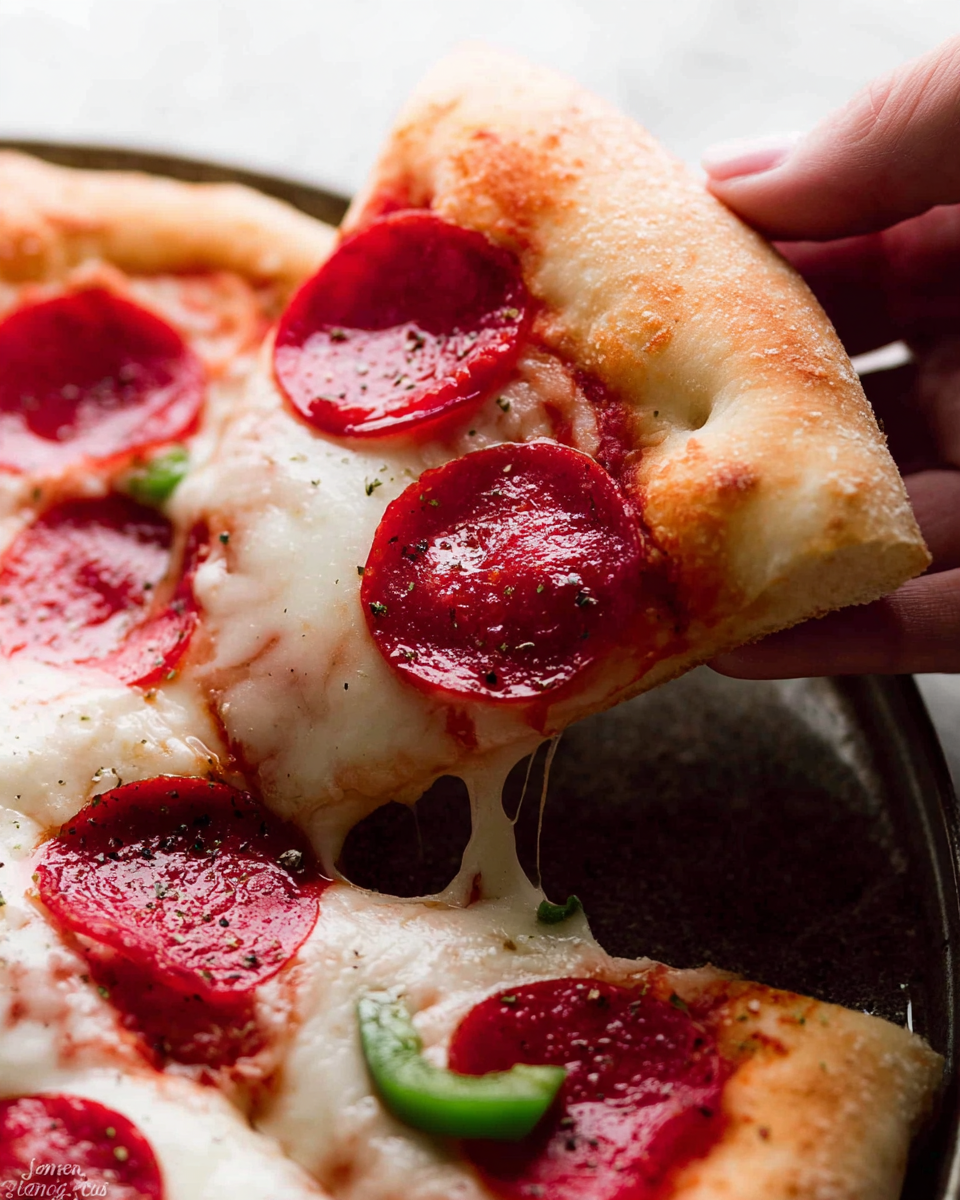
Once you’ve mastered the dough, the real fun begins with toppings. While classic margherita pizza is always a winner, don’t be afraid to experiment. Consider combinations like caramelized onions with goat cheese, or spicy sausage with roasted peppers. The beauty of homemade pizza is that you can customize it to your exact preferences.
For inspiration beyond traditional pizza, check out our Balsamic Mushroom & Goat Cheese Pizza for a gourmet twist that will impress even the most discerning pizza lovers.
Baking Tips for Perfect Results
Preheat your oven thoroughly – a hot oven is essential for that crisp crust. If you have a pizza stone, use it! The stone absorbs moisture and transfers heat efficiently, giving you that professional-quality crust. Don’t overload your pizza with toppings, as this can prevent the crust from cooking properly and lead to a soggy bottom.
Remember that practice makes perfect. Your first attempt might not be restaurant-quality, but with each try, you’ll learn more about how the dough behaves and how to achieve your ideal crust texture. The journey to pizza perfection is part of the fun!
Storing and Freezing Your Pizza Dough
One of the greatest advantages of this recipe is its freezer-friendly nature. After the first rise, divide the dough in half, wrap each portion tightly in plastic wrap, and freeze for up to three months. When you’re ready to use frozen dough, simply transfer it to the refrigerator the night before you plan to bake, then let it come to room temperature before shaping.
This make-ahead approach means you can enjoy homemade pizza any night of the week with minimal effort. It’s perfect for busy weeknights when you want a satisfying meal without the lengthy preparation time.
Troubleshooting Common Pizza Dough Issues
If your dough isn’t rising properly, check your yeast expiration date and ensure your water temperature is correct. Dough that’s too sticky usually needs more flour, while dough that’s too dry may require a bit more water. Remember that flour measurements can vary based on humidity and brand, so adjust gradually until you achieve the right consistency.
For more baking troubleshooting tips, our Foolproof Banana Bread Recipe includes valuable insights that apply to many yeast and quick bread recipes.
Elevating Your Homemade Pizza Experience
Beyond the basic recipe, consider what makes pizza special for you. Is it the crispiness of the crust? The perfect cheese pull? The balance of flavors? Pay attention to these details as you bake, and don’t be afraid to adjust the recipe slightly to suit your preferences. Baking is both science and art, and the best recipes are those that you make your own.
Whether you’re making pizza for a family dinner, a party with friends, or just treating yourself to a homemade meal, this recipe provides the foundation for countless delicious creations. The satisfaction of pulling a perfectly baked pizza from your own oven is an experience that keeps home cooks coming back to this classic recipe again and again.
Remember that great pizza starts with great dough, and with this recipe, you’re well on your way to creating pizzas that will become family favorites for years to come. Happy baking!
Homemade Pizza with The Easiest Crust
Ingredients
Equipment
Method
- Whisk the warm water, granulated sugar, and yeast together in the bowl of your stand mixer fitted with a dough hook or paddle attachment. Cover and allow to rest for 5 minutes. If you don’t have a stand mixer, simply use a large mixing bowl and mix the dough with a wooden spoon or silicone spatula in the next step.
- Add the flour, olive oil, and salt. Beat on medium speed for 2 minutes, until the dough pulls away from the sides of the bowl.
- Keep the dough in the mixer and beat for an additional 5 full minutes, or knead by hand on a lightly floured surface for 5 full minutes. If the dough becomes too sticky during the kneading process, sprinkle 1 teaspoon of flour at a time on the dough or on the work surface/in the bowl to make a soft, slightly tacky dough. After kneading, the dough should still feel a little soft. Poke it with your finger—if it slowly bounces back, your dough is ready to rise.
- Let the dough rise in a greased bowl covered with plastic wrap until doubled in size, about 1-2 hours at room temperature.
- Divide the dough into two equal portions. Punch down each portion and shape into pizza crusts on cornmeal-dusted pans.
- Brush with olive oil, add minced garlic (optional), spread pizza sauce, and top with mozzarella cheese.
- Bake in a preheated hot oven (preferably with a pizza stone) at 475-500°F (245-260°C) for 12-15 minutes until crust is golden brown and cheese is bubbly.