Summer Delight Caprese Chicken: Easy 20-Minute Dinner Recipe
There is something truly magical about the combination of fresh mozzarella, ripe tomatoes, and fragrant basil that transports me straight to a sunny Italian countryside. I remember the first time I tasted Caprese salad during a summer trip to Tuscany, and ever since, I have been obsessed with incorporating those vibrant flavors into my everyday cooking. This Caprese chicken recipe is my absolute favorite way to bring that Italian summer feeling to the dinner table, even on the busiest of weeknights.
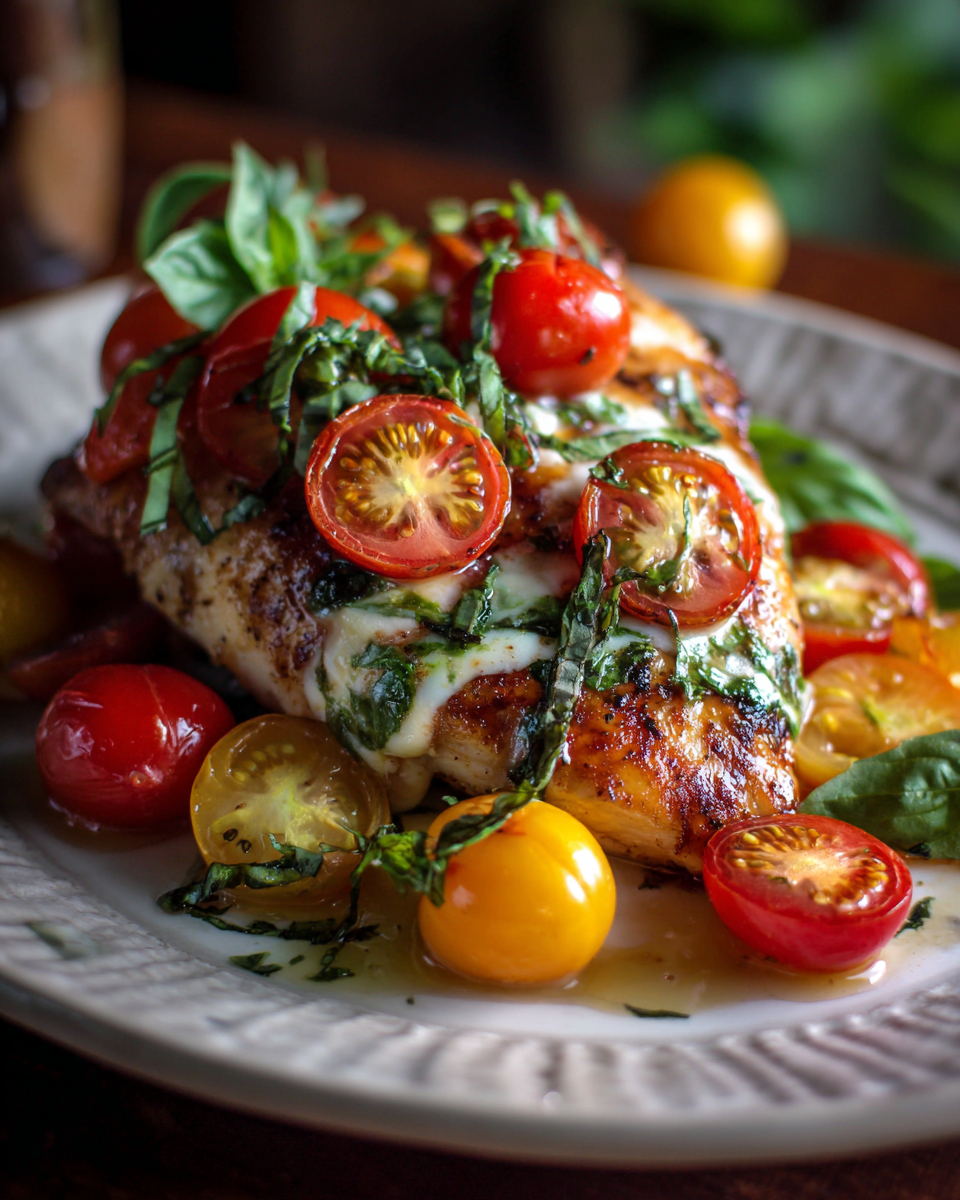
Why This Caprese Chicken Recipe Will Become Your Go-To Dinner
What I love most about this recipe is how effortlessly it comes together. In just 20 minutes, you can transform simple chicken breasts into a restaurant-quality meal that feels both elegant and comforting. The beauty of Caprese chicken lies in its simplicity each ingredient shines through, creating a harmony of flavors that will make you feel like a gourmet chef without spending hours in the kitchen.
This dish is incredibly versatile too. Whether you are cooking for a romantic date night, a family gathering, or simply treating yourself to a special meal, Caprese chicken adapts beautifully. The colors alone will brighten up your plate, and the combination of juicy chicken, creamy mozzarella, and tangy balsamic glaze creates a sensory experience that goes far beyond mere sustenance.
Gathering Your Ingredients for Perfect Caprese Chicken
The secret to outstanding Caprese chicken starts with quality ingredients. While the recipe is simple, each component plays a crucial role in the final result. Let me walk you through what you will need and why each ingredient matters.
Start with one pound of boneless, skinless chicken breasts. I always look for evenly sized pieces to ensure they cook at the same rate. If your chicken breasts are particularly thick, dont worry we will address that in the preparation steps. The chicken acts as our canvas, providing a lean protein base that perfectly complements the other ingredients.
For seasoning, you will need kosher salt and black pepper. I prefer kosher salt because its flakes distribute more evenly than table salt, giving you better control over seasoning. Freshly ground black pepper adds a subtle warmth that enhances without overpowering the delicate flavors.
Extra virgin olive oil is essential for cooking the chicken. Its fruity notes add another layer of flavor that regular olive oil just cannot match. When shopping for olive oil, I look for bottles labeled extra virgin and preferably from a recent harvest date for the best flavor.
Basil pesto brings the herbal backbone to our dish. You can use store-bought pesto for convenience, but if you have fresh basil on hand, making your own pesto takes this recipe to another level. The combination of fresh basil, garlic, pine nuts, and Parmesan cheese in pesto creates an aromatic foundation that permeates the entire dish.
Fresh mozzarella cheese is non-negotiable for authentic Caprese flavor. Look for the kind packed in water, as it has a creamier texture and milder flavor than low-moisture mozzarella. The slices should be about a quarter to half inch thick enough to melt beautifully but not so thick that they overwhelm the chicken.
Ripe tomatoes are key here. I wait until summer when tomatoes are at their peak, but any ripe, flavorful tomato will work. The tomato slices should be similar in thickness to the mozzarella for visual appeal and even distribution of flavor.
Balsamic glaze or reduction provides the finishing touch. This concentrated version of balsamic vinegar has a syrupy consistency and sweet-tart flavor that balances the richness of the cheese and chicken. You can find it in most grocery stores, or reduce regular balsamic vinegar yourself by simmering it until thickened.
Finally, fresh basil leaves complete the Caprese experience. I use some whole leaves for presentation and slice the rest into ribbons to sprinkle over the finished dish. The fresh basil added at the end provides a burst of aroma and flavor that cooked basil simply cannot replicate.
Step-by-Step Cooking Instructions for Perfect Results
Now for the fun part lets transform these beautiful ingredients into an incredible meal. Follow these steps carefully, and you will have restaurant-quality Caprese chicken ready in no time.
Begin by preparing your chicken breasts. If they are large and thick, I highly recommend cutting them horizontally through the middle to create thinner cutlets. This not only helps them cook faster and more evenly but also makes for more elegant portions. If you want especially tender chicken, use a kitchen mallet to gently flatten the breasts to an even thickness. This simple step makes a remarkable difference in the final texture.
Next, pat the chicken dry with paper towels. This might seem like a small detail, but dry chicken sears much better than wet chicken, giving you that beautiful golden-brown crust we all love. Season both sides generously with salt and pepper dont be shy here, as this is your primary seasoning for the chicken itself.
Heat your indoor griddle or pan over high heat. I prefer using a heavy-bottomed skillet for even heat distribution. Add about one tablespoon of extra virgin olive oil, just enough to coat the bottom of the pan. Wait until the oil shimmers before adding the chicken this indicates its hot enough for proper searing.
Carefully place the chicken in the hot pan. You should hear a satisfying sizzle if your pan is properly heated. Cook for three to five minutes on the first side, depending on the thickness of your chicken. Resist the temptation to move the chicken around let it develop that beautiful crust. When the edges start to look cooked and the bottom releases easily from the pan, its time to flip.
Cook on the second side for another three to five minutes. The chicken is done when its internal temperature reaches 165 degrees Fahrenheit. I always use a meat thermometer for accuracy nothing ruins a meal like overcooked chicken. If you do not have a thermometer, make a small cut in the thickest part the juices should run clear.
Now for the magic moment in the last couple minutes of cooking, top each chicken piece with a generous spoonful of basil pesto. Immediately place a slice of fresh mozzarella on top of the pesto. The residual heat will gently melt the cheese and warm the pesto, releasing incredible aromas throughout your kitchen.
Remove the pan from heat and let it rest for a minute. This resting period allows the juices to redistribute throughout the chicken, ensuring every bite is moist and flavorful. Now add the fresh tomato slices and whole basil leaves on top of each chicken piece.
Finally, drizzle with balsamic reduction and sprinkle with the basil ribbons you set aside earlier. The contrast of the dark balsamic glaze against the white mozzarella and red tomatoes creates a stunning visual presentation that will impress anyone at your table.
Creative Variations and Serving Suggestions
While this classic Caprese chicken recipe is perfect as written, there are countless ways to customize it based on your preferences or what you have available. Here are some of my favorite variations.
For a lighter version, you can use chicken tenders instead of whole breasts. They cook even faster and make perfect individual servings. If you are following a keto diet, this recipe is naturally low in carbohydrates, especially if you serve it with a side of roasted vegetables instead of pasta or bread.
If you love garlic, add a minced clove to the pesto or sprinkle some garlic powder on the chicken before cooking. For extra freshness, you can add a squeeze of lemon juice over the finished dish. Sometimes I like to add a few capers or olives for a briny contrast that cuts through the richness beautifully.
When it comes to serving, Caprese chicken pairs wonderfully with so many sides. For a complete Italian experience, serve it over a bed of pasta or with crusty bread to soak up the delicious juices. A simple arugula salad with lemon vinaigrette makes a refreshing accompaniment that balances the richness of the chicken.
If you are watching your carb intake, roasted vegetables like asparagus, zucchini, or bell peppers complement the chicken beautifully. For a heartier meal, serve it with roasted potatoes or risotto. The possibilities are endless, which is why this recipe remains in my regular rotation throughout the year.
Why This Recipe Works So Well for Busy Cooks
As someone who values both flavor and efficiency in the kitchen, I appreciate recipes that deliver maximum impact with minimal effort. This Caprese chicken checks all the boxes for a perfect weeknight dinner.
The twenty-minute cooking time is achievable even after a long day at work. The ingredients are readily available at most grocery stores, and many can be kept on hand for impromptu meals. Chicken breasts freeze well, pesto keeps for weeks in the refrigerator, and balsamic reduction has a long shelf life.
This recipe is also incredibly forgiving. Unlike some dishes that require precise timing, Caprese chicken is flexible. If you need to pause after cooking the chicken, you can hold it warm in the oven while you prepare sides. The assembly at the end takes just moments, making it perfect for entertaining when you want to spend time with guests rather than stuck in the kitchen.
From a nutritional perspective, this dish offers a wonderful balance of lean protein, healthy fats, and fresh vegetables. The chicken provides high-quality protein to keep you satisfied, while the olive oil and mozzarella contribute healthy fats. Tomatoes bring vitamins and antioxidants, and basil offers anti-inflammatory benefits.
What I love most is how this recipe makes healthy eating feel indulgent. The combination of textures and flavors is so satisfying that you will not feel like you are eating diet food, yet it aligns beautifully with various healthy eating patterns from Mediterranean to low-carb approaches.
Storing and Reheating Your Caprese Chicken
If you happen to have leftovers though I rarely do they store beautifully for next-day meals. Store leftover Caprese chicken in an airtight container in the refrigerator for up to three days. The flavors actually meld together wonderfully overnight, making the leftovers potentially even more delicious than the fresh preparation.
When reheating, I recommend using the oven or toaster oven rather than the microwave to preserve the texture of the chicken and cheese. Heat at 350 degrees Fahrenheit for about ten to fifteen minutes, or until warmed through. You can also enjoy leftover Caprese chicken cold, sliced over a salad for a quick lunch.
For meal prep, you can partially prepare this dish in advance. Season and pound the chicken the night before, and have your tomatoes sliced and basil ready to go. This makes the actual cooking process even faster when you are ready to eat.
I hope this Caprese chicken recipe brings as much joy to your kitchen as it has to mine. There is something truly special about creating a meal that feels both rustic and refined, simple yet spectacular. The next time you are looking for a dinner that delivers maximum flavor with minimal effort, give this recipe a try. I promise it will become a cherished part of your cooking repertoire, just as it has become in mine.
Summer Delight: Caprese Chicken with Fresh Tomato and Basil
Ingredients
Equipment
Method
- If the chicken breasts are large and thick, cut them horizontally through the middle to make thinner cutlets or pieces. If you like, use a kitchen mallet to tenderize and flatten the chicken breasts before cooking. This helps them cook quickly and evenly.
- Pat the chicken dry and season with salt and pepper on both sides.
- Heat an indoor griddle or pan over high heat. Drizzle about 1 tbsp extra virgin olive oil to coat bottom of pan.
- Add the chicken and cook for 3 to 5 minutes on each side or until done (chicken’s internal temperature should register 165 degrees F).
- In the last couple minutes or so of cooking, top each piece of chicken with a bit of the basil pesto then add a mozzarella slice on top.
- Remove from heat. Add fresh basil leaves and tomato slices on top of each chicken piece and finish with a little balsamic reduction (or balsamic glaze). Finally, sprinkle fresh basil ribbons and serve!