The Best Homemade Pizza Dough Recipe: Easy 30-Minute No-Rise Method
There’s something magical about homemade pizza that store-bought versions simply can’t replicate. The moment you pull that golden, bubbly crust from the oven, the aroma filling your kitchen promises an experience that transcends ordinary takeout. I remember the first time I tried making pizza dough from scratch – the way the yeast bloomed in warm water felt like watching alchemy unfold before my eyes.
Why This Homemade Pizza Dough Stands Apart
What makes this recipe truly special is its simplicity and speed. Traditional pizza dough recipes often require hours of rising time, leaving you waiting impatiently while hunger pangs grow. But this version transforms your kitchen into a pizzeria in just 30 minutes flat. The secret lies in understanding the science behind yeast activation and gluten development.
I discovered this method during a frantic weeknight when unexpected guests showed up hungry. With limited time and ingredients, I experimented with higher yeast ratios and warmer temperatures, creating what would become our family’s go-to pizza dough recipe. The result? A crust with the perfect balance of chewiness and crispiness that rivals any artisanal pizzeria.
The Simple Ingredients That Create Magic
Great pizza dough doesn’t require complicated ingredients. In fact, some of the best pizza I’ve ever tasted came from kitchens using just five basic components:
- 1 cup warm water (105 degrees F) – the perfect temperature to wake up the yeast without killing it
- 1 Tablespoon granulated sugar – providing fuel for the yeast to work its magic
- 1 Tablespoon active dry yeast – the heart and soul of any good dough
- 1 Tablespoon olive oil – adding richness and tenderness to the crust
- 2 to 2 ½ cups all-purpose flour* – the foundation that creates structure
- 1 tsp fine sea salt – balancing flavors and strengthening gluten development
That asterisk next to the flour measurement deserves attention. The exact amount depends on factors like humidity and flour brand. I always start with 2 cups and add more gradually until the dough reaches that perfect tacky-but-not-sticky consistency.
The Step-By-Step Process to Pizza Perfection
Step 1: Preheating Your Oven and Pizza Stone
Begin by cranking your oven to 500 degrees Fahrenheit (260 degrees Celsius). This high heat mimics commercial pizza ovens, creating that characteristic crisp crust we all crave. Place your pizza stone in the cold oven as it preheats, allowing it to heat gradually alongside the oven. Let it sit at 500 degrees for at least 10 minutes after reaching temperature – this ensures even heat distribution and prevents thermal shock.
I learned the hard way that skipping this step results in unevenly cooked pizza. One memorable attempt left me with a crust that was burnt on the edges while the center remained doughy. Trust me, patience during preheating pays dividends in pizza perfection.
Step 2: Creating Your Pizza Dough
Now for the hands-on part that makes pizza-making feel like a culinary adventure. Start by combining warm water and sugar in a large bowl. The water temperature is crucial – too hot kills the yeast, too cold slows activation. I use a kitchen thermometer religiously, but if you don’t have one, aim for water that feels comfortably warm to your wrist.
Sprinkle the yeast over the water-sugar mixture and watch as tiny bubbles begin to form within minutes. This foaming action signals that your yeast is alive and ready to work. After about 5 minutes, stir in the olive oil – this not only adds flavor but also contributes to a more tender crust.
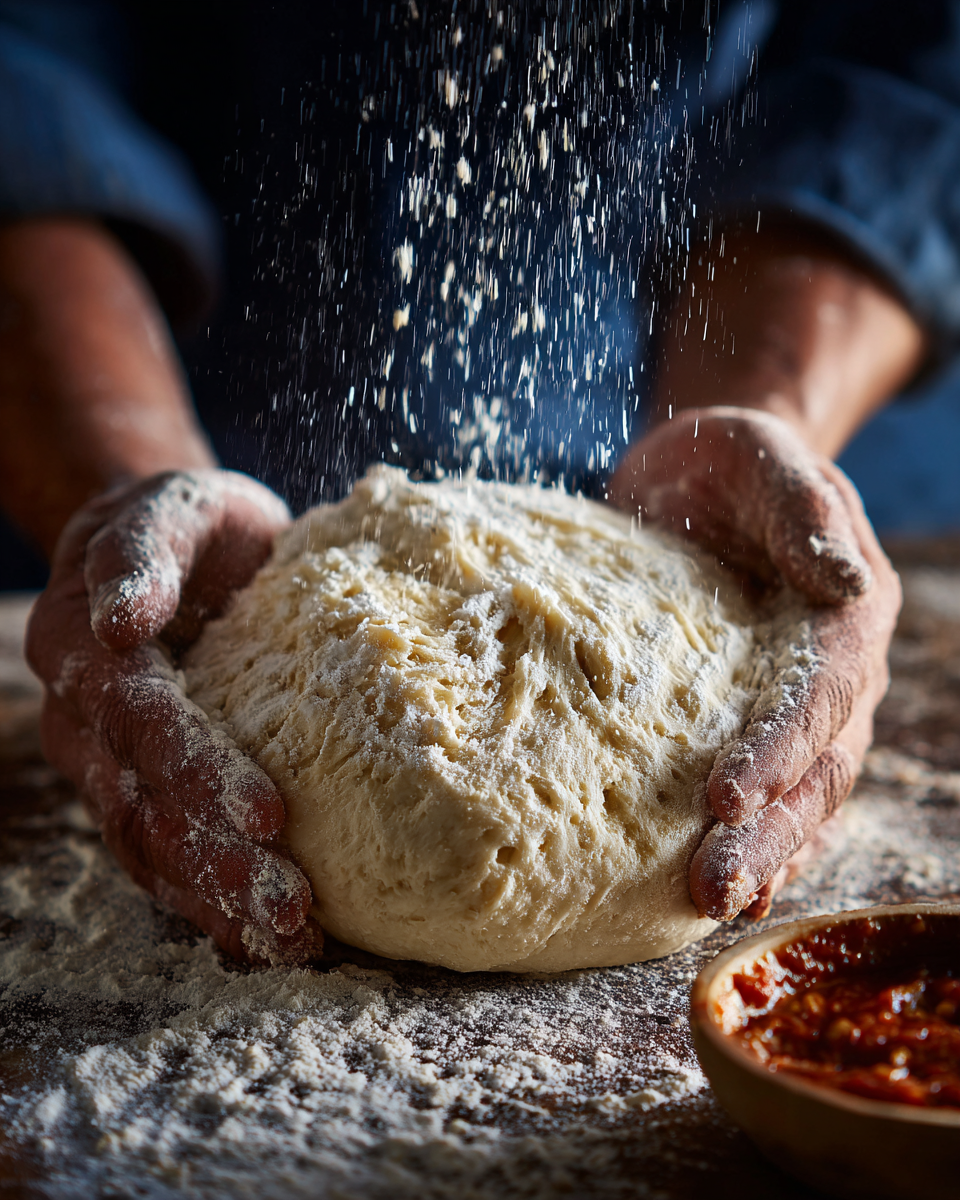
Gradually add flour and salt, mixing until a shaggy dough forms. Turn it onto a floured surface and knead for 5-7 minutes. The transformation from sticky mess to smooth, elastic ball never fails to amaze me. You’ll know it’s ready when it springs back slowly after pressing with your finger.
Step 3: Assembling Your Masterpiece
Roll out your dough on a lightly floured surface, creating your desired pizza shape. I love the rustic irregularity of hand-stretched crusts, but a rolling pin works perfectly if you prefer uniform thickness. Transfer the dough to a piece of parchment paper – this makes moving it to the hot pizza stone much easier.
Now comes the creative part! Add your favorite sauce, cheese, and toppings. My family debates toppings constantly – my daughter insists on pineapple (controversial, I know), while my husband prefers classic pepperoni. The beauty of homemade pizza is customization without extra charges.
Step 4: Baking to Perfection
Carefully slide the parchment paper with your assembled pizza onto the preheated stone. The sizzle you hear is music to any pizza lover’s ears. Bake for 10-15 minutes, watching for that perfect golden-brown crust and bubbly cheese.
Remove from oven using a pizza peel or large spatula, letting it rest for a minute before slicing. That brief waiting period tests everyone’s willpower in my household, but it allows the cheese to set properly.
Tips for Consistent Success
After making this recipe countless times, I’ve gathered some insights that guarantee perfect results every time. First, don’t skip the sugar – it’s not just for sweetness but provides essential food for the yeast. Second, measure your flour correctly by spooning it into the measuring cup rather than scooping, which can compact it and lead to dry dough.
If your dough seems too sticky, add flour one tablespoon at a time. Too dry? A teaspoon of water can revive it. Remember that humidity affects dough consistency, so adjust accordingly based on your kitchen environment.
Customization Ideas for Endless Variety
The beauty of mastering homemade pizza dough lies in the endless possibilities it unlocks. Try adding herbs like rosemary or oregano directly into the dough for flavored crusts. For a whole wheat version, substitute up to half the flour with whole wheat flour.
This dough also works beautifully for calzones, pizza rolls, or even breadsticks. My kids love when I make mini pizzas they can top themselves – it turns dinner into a fun activity that gets them excited about cooking.
Why Homemade Pizza Beats Takeout Every Time
Beyond the obvious cost savings, homemade pizza offers complete control over ingredients and freshness. You know exactly what goes into your food, can adjust toppings to dietary needs, and enjoy that unbeatable just-out-of-the-oven quality that delivery simply can’t match.
The process itself becomes a cherished ritual – the kneading therapy, the anticipation as aromas fill your home, the shared experience of creating something delicious together. It’s these moments that transform ordinary weeknights into memorable family occasions.
So next time pizza cravings strike, resist the urge to dial for delivery. Instead, gather those five simple ingredients and embark on a 30-minute culinary adventure that rewards you with the most satisfying pizza experience imaginable. Your taste buds – and your wallet – will thank you.
Best Homemade Pizza Dough
Ingredients
Equipment
Method
- Preheat oven to 500°F (260°C). Place pizza stone in cold oven and let it heat completely, then maintain at 500°F for at least 10 minutes before baking.
- Combine warm water and sugar in large bowl. Sprinkle yeast over mixture and let foam for 5 minutes until bubbly. Stir in olive oil.
- Gradually add flour and salt, mixing until shaggy dough forms. Knead on floured surface for 5-7 minutes until smooth and elastic.
- Roll dough on floured surface to desired shape. Transfer to parchment paper, add toppings, then slide onto preheated pizza stone.
- Bake for 10-15 minutes until crust is golden brown and cheese is bubbly. Let rest 1 minute before slicing.